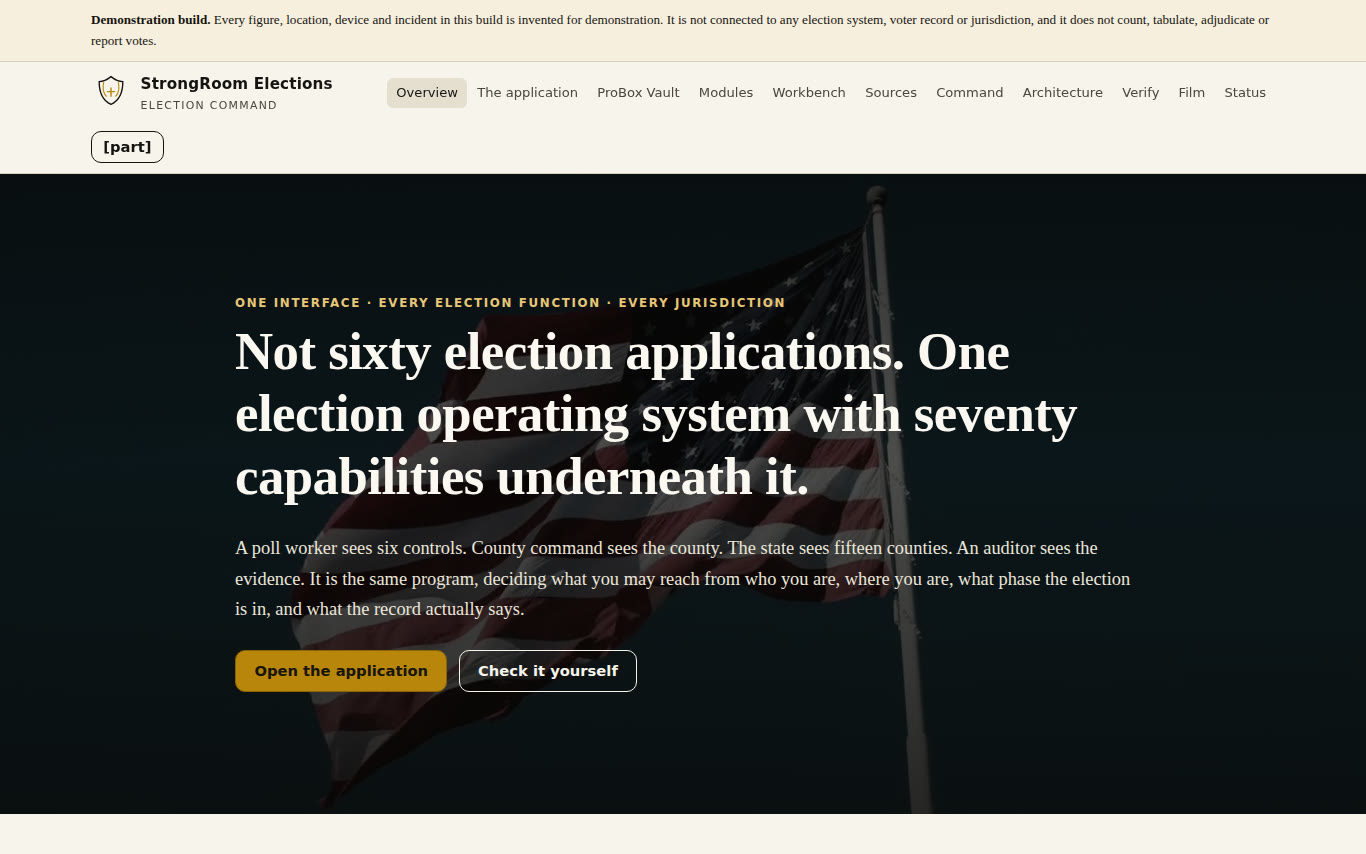
StrongRoom Elections (validation copy)
A validation build of the proposed StrongRoom election platform interface, used to review screens and workflows with synthetic records.
For: Reviewers evaluating the proposed election platform interface
ERC · Evidence, readiness and custody
ERC keeps a claim-by-claim record of what has actually been tested in BB2G's election work — and says plainly what has not. It is an evidence programme. It never counts votes.

Where things stand · 24 September 2026
Status: no election component is operational or approved for use with real people or real data. Every repository reviewed describes itself as synthetic-only or scaffolding, or has open approval gates.
Demonstration
The demo seals a synthetic ballot container, records each hand-off, chains every event with a SHA-256 fingerprint, and then lets you alter a record to see the check catch it. It also shows what a fingerprint cannot do: it detects changed bytes, not physical tampering or theft.
Simulated Synthetic containers and counts only. No ballot choices, voter records or identities.
Silent screen recording of the synthetic demo, about a minute long, with captions.
Interfaces under review
A validation build of the proposed StrongRoom election platform interface, used to review screens and workflows with synthetic records.
For: Reviewers evaluating the proposed election platform interface
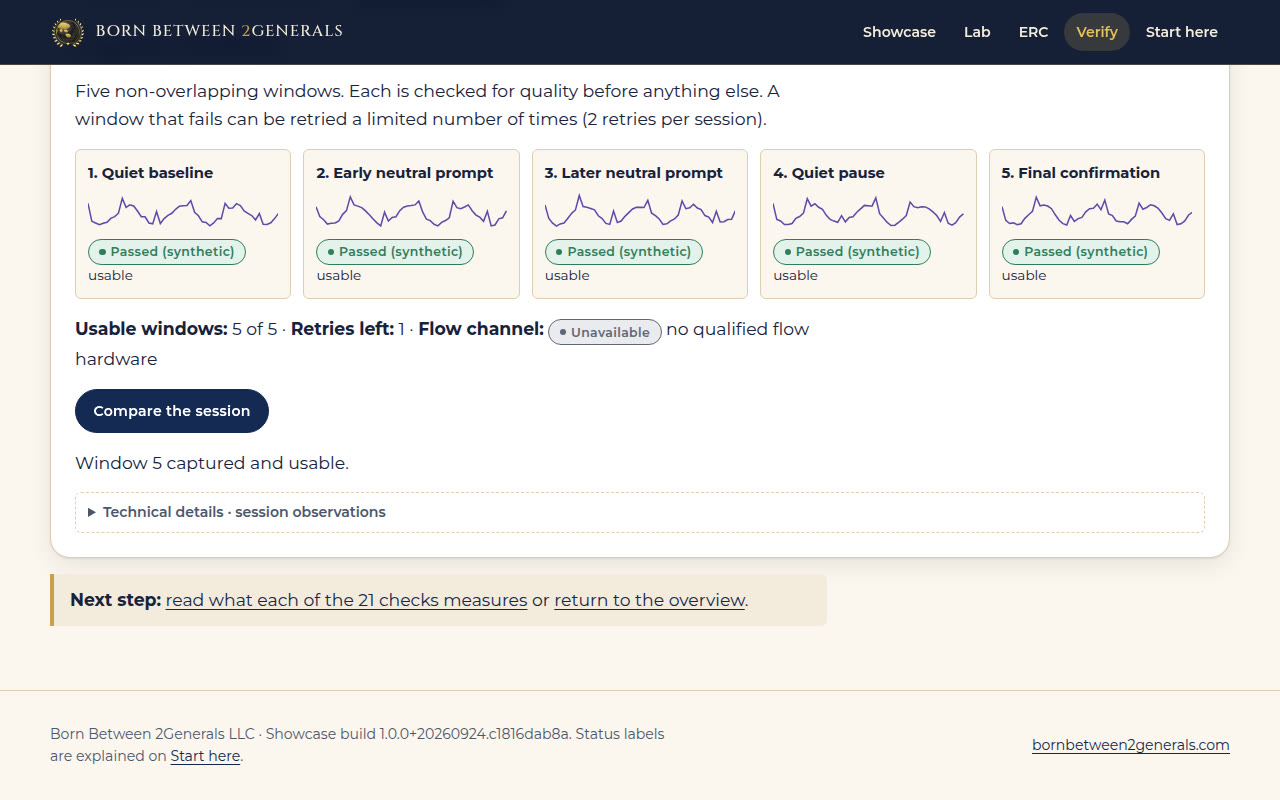
A research plan for voluntary, consented, one-to-one check-in that keeps presence, identity, session integrity and eligibility as four separate decisions — organised as 21 checks and controls.
For: Researchers, accessibility reviewers and security reviewers
Next step: try the custody demo yourself, or read the human-verification research.